Showing posts with label nonfiction. Show all posts

Thursday, November 17, 2016

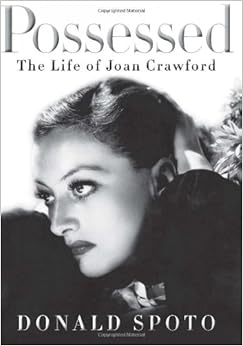
Possessed: The Life of Joan Crawford by Donald Spoto

Posted by Anonymous

Reviewed by: Jim Patrick

What I Read: Possessed: The Life of Joan Crawford by Donald Spoto

Find It @YCLD: Here!

What It's About: Donald Spoto opens his 2010 biography of Hollywood legend Joan Crawford by recounting his happy memory of writing Crawford a fan letter as an 11-year old and receiving a signed personal reply from the actress.  This anecdote sets the tone for Spoto's sympathetic effort to humanize a woman who has frequently been caricatured as the vicious "Mommy Dearest" of daughter Christine's infamous memoir and the 1981 film starring Faye Dunaway.  The real Joan Crawford was much more complicated and fascinating.  She rose from a troubled working-class background in the Midwest to Hollywood royalty with her 1929 marriage to Douglas Fairbanks, Jr.  This first of four marriages did not last, however.  As Spoto quotes Crawford, “I was always an outsider.  I was never good enough—not for the Fairbanks tribe, not for Mayer; not for his so-called film society.”  Joan Crawford used this sense of inferiority to constantly drive herself to improve as an actress, as a self-taught student of the arts, and as a mother of four adopted children.  Yet late in her life Crawford admitted that she had not been an ideal mother:  “You wanted to be a mother, but there just wasn’t time for it.”

What I Thought: I am a fan of Joan Crawford, although I will concede that her overcharged performances—especially in weaker films—often teeter on the brink of campy melodrama.  Donald Spoto does a fine job of guiding the reader through Crawford’s long, prolific career, pointing out high and low points along the way.  He gives examples of Crawford’s on-set behavior that confirm her reputation of being difficult and demanding, but he also shares reflections of costars and directors who spoke fondly of her support and loyalty.  Even Bette Davis—an alleged hated rival—discounted the infamous “feud” that supposedly played out during the filming of “What Ever Happened to Baby Jane?”:  “In three weeks of filming together, nothing bad happened between us.”  Donald Spoto defends Joan Crawford against the charges of her daughter Christine, but he doesn’t devote much space to Joan’s home life.  He does discuss her four marriages and numerous love affairs.  Interestingly, she remained close and friendly with most of these men long after the romances ended—particularly with Clark Gable.  Overall, I found Donald Spoto’s biography of Joan Crawford to be quite enjoyable and informative.  I would also recommend these Joan Crawford movies which can be found in the library’s DVD collection:  “The Women” (1939), “Mildred Pierce” (1945), and “What Ever Happened to Baby Jane” (1962).

Readalikes: Dark Victory: The Life of Bette Davis by Ed Sikov; Clark Gable: A Biography by Warren Harris

Or look this book up on NoveList!

Thursday, October 6, 2016

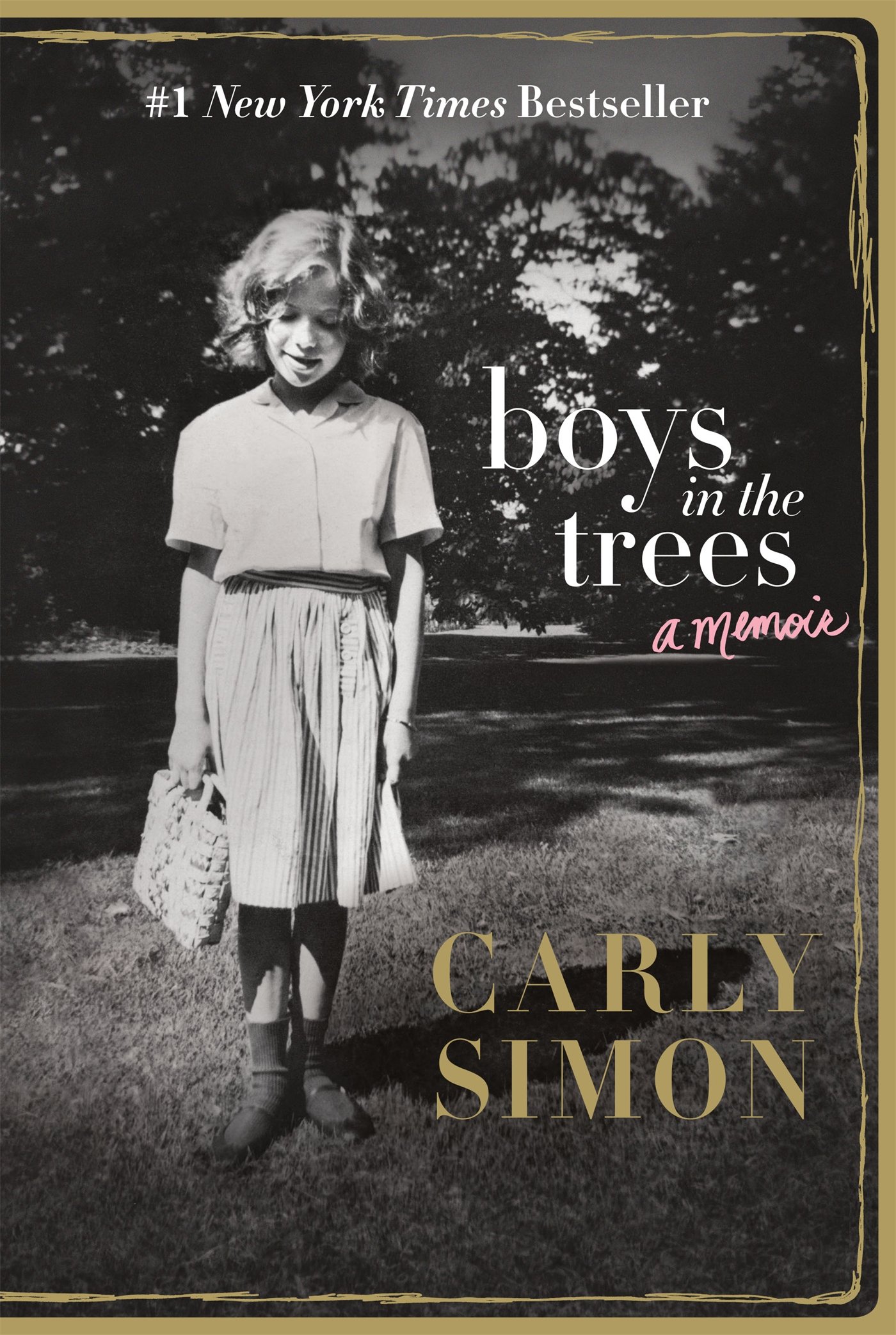
Boys in the Trees by Carly Simon

Posted by Anonymous


Reviewed by: Jim Patrick

What I Read: Boys in the Trees: A Memoir by Carly Simon

Find It @YCLD: Here!

What It's About: Now 70 years old, singer Carly Simon reflects on the first half of her life in Boys in the Trees: A Memoir.  The book is so brave and revealing that perhaps another Carly Simon song title would have been more fitting: We Have No Secrets.  

Thanks to an astonishing memory for details—aided by a lifetime of diary writing—Simon recounts incidents from her childhood up to the end of her marriage to singer James Taylor in 1981.  Far from her image as a spoiled rich girl—her father was the Simon of Simon and Schuster publishing—Carly Simon’s youth was scarred by her parents’ unhappy marriage and her own poor self-image.  As a pre-teen, Simon was physically molested by a family acquaintance.  She suffered for years with a stuttering impediment, and she has been treated for depression throughout her life.

Her success as a singer, originally as a duo with sister Lucy, seems to have taken Carly by surprise, and given her lifelong stage fright, Simon’s fame was a mixed blessing.  Her stardom did bring her in contact with others in the entertainment industry, and much of the book details romantic encounters with familiar icons such as Warren Beatty, Kris Kristofferson, Mick Jagger, and Cat Stevens.  And, yes, the mystery inspiration of Simon’s “You’re So Vain” is at least partially answered: Warren Beatty inspired one of the verses.  The latter part of the book details the decade-long marriage to James Taylor, a brilliant musician who was plagued by a heroin addiction throughout his years with Carly Simon.

What I Thought: Since this is not a “breezy” show business memoir, it does not always make for easy reading.  Carly Simon shares painful and unflattering episodes from her life, along with personal and professional joys and successes.  There were times when I would have preferred fewer intimate details (e.g. the description of her 1981 onstage panic attack in Pittsburgh), but overall I came away admiring Simon’s honesty and perseverance.  As a baby boomer who closely followed the music of Carly Simon and James Taylor at the height of their popularity, I would have liked more behind the scenes accounts of that musical era.  Although that was not the primary focus of Simon’s book, I did enjoy the musical anecdotes that were included.  And I look forward to reading the sequel.  

Readalikes: Girls Like Us: Carole King, Joni Mitchell, Carly Simon—and the Journey of a Generation by Sheila Weller; Sweet Dreams and Flying Machines: The Life and Music of James Taylor by Mark Ribowsky

Or look this book up on NoveList!

Thursday, September 22, 2016

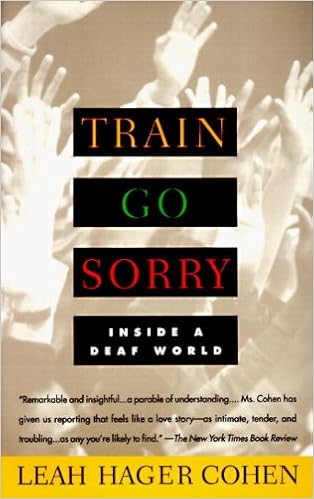
Train Go Sorry by Leah Hager Cohen

Posted by Anonymous


Reviewed by: José Beltrán

What I Read: Train Go Sorry: Inside a Deaf World by Leah Hager Cohen

Find It @YCLD: Here!

What It's About: Leah was one of the first hearing children who attended the Lexington School for the Deaf in Queens, New York. She felt she had missed the boat to belonging to the deaf. “I’m so hearing,” she lamented. She so wanted to share in their intimacy. Her parents were engrossed in the school: her Jewish father, Oscar, was principal then director and her Protestant mother was a nursery school teacher. Oscar was a CODA (hearing child of deaf adults).

Leah’s family was also a cultural microcosm of religions, races, hearing, and deaf. Her parents were hearing. Her grandparents Sam and Fanny Cohen were deaf. Had Sam’s deafness been detected at Ellis Island, he would not have been allowed to enter the USA. In 1916 they were called Deaf-Mutes, more familiarly Deaf Dumb. The insensitivity of the past is erased as cultures and societies evolve. The personal tragedy of the Cohen family was that the hospital did not provide an interpreter to Sam or his wife Fanny, or allow their bicultural son to communicate with the doctors after Sam’s heart attack.

What I Thought: “Train go sorry” is a Deaf idiom for “missing the boat, missed connections, lost opportunities”. This book is an impassioned plea for the civil rights of Deaf culture. The Deaf should be the ones to decide what is best for them instead of being expected to conform to hearing culture or communicating like hearing people. About 1 in 20 Americans are Deaf or hard of hearing (deaf). There are over 4 million Deaf people in the United States. Sign language is used by about 70 million people worldwide and is the fourth most used language. ASL is accepted by many schools for fulfillment of foreign language requirements.

Still many Deaf people feel isolated! Deaf Melissa testified that she had first attended a hearing school then transferred to a deaf school. At the hearing school she was isolated, shy, and passive, unable to participate. In the deaf school, her participation soared as cheerleader, peer counselor, choreographer, and as the lead in the Deaf school play.

The Deaf like all people yearn for connection. But they find themselves confined to the small world of those who know ASL. You can make the world of the Deaf larger by learning ASL. The Yuma County Library District have books and DVDs for learning ASL. Look at the eyes! Use peripheral vision for the hands. Join a Deaf Club!

Readalikes: Deaf Again, Children of a Lesser God, The Mask of Benevolence: Disabling the Deaf Community, When the Mind Hears

Or look this book up on NoveList!

Monday, July 25, 2016

Patron Picks! Summer Reading 2016 - Week 6

Posted by Anonymous


Wow! We have a bumper crop of new reviews for the last week of the 2016 Summer Reading Program! Thanks to everyone for sending in their reviews. We will contact the winner of the last $10 gift card later this week. 

Here are the last patron reviews of SRP 2016!

Reviewed By: Mary H.
What I ReadWhere'd You Go, Bernadette by Maria Semple
Find It @ YCLDHere!

What I ThoughtBased in Seattle, about a mom dealing with a nervous breakdown. Very funny read.

Reviewed By: Jeanette W.
What I ReadThe Sackett Brand by Louis L'Amour
Find It @ YCLDHere!

What I ThoughtWhat a great book! Tell Sackett is heading west with his new bride when he is attacked, his wife murdered, and his outfit burned. He is a hunted man as he sets out to find the man who killed his wife. I love that this is a clean book with no foul language or sex. I for sure want to read more about the Sacketts.

Reviewed By: Linda P.
What I Read: Finding Jake by Bryan Reardon
Find It @ YCLD: Here!

What I ThoughtI enjoyed this book. It was a good mystery. I can't imagine what I would do if my child could not be found in the chaos of a shooting.

Reviewed By: Linda P.
What I Read: A Man Called Ove by Fredrik Backman
Find It @ YCLD: Here!

What I ThoughtAt first you think Ove is just an old, cranky, man who complains about everything and everyone, but by the end of the book you will wish that you could be more like Ove.

Reviewed By: Linda P.
What I Read: All The Light We Cannot See by Anthony Doerr
Find It @ YCLD: Here!

What I ThoughtI enjoyed this book but when I was nearing the end I couldn't help feel a sense of relief to have finished the book.

Reviewed By: Tom B.
What I Read: The Hundred-Year-Old Man Who Climbed Out the Window and Disappeared by Jonas Jonasson
Find It @ YCLD: Here!

What I ThoughtThis book was laugh out loud funny. By going on a journey through the main historical events of the 20th century, Allan Karlsson has certainly lived an eventful, out of the ordinary, crazy life.

Reviewed By: Tom B.
What I Read: The Smoke Is Rising by Mahesh Rao

What I ThoughtI was disappointed with this. I didn't think this went together as a novel. The parts telling the story of a few main characters were fragmented, but well written. But the parts that were involved with the local 'politics' were tedious.

Reviewed By: Joann B.
What I Read: The Girl on the Train by Paula Hawkins
Find It @ YCLD: Here!

What I ThoughtI think it's interesting that the main character, Rachel, challenges us to think about how much we assume about--and pre-judge--other people based on our limited knowledge of them. To feel pity, disgust, frustration, compassion, and so much more for one character is a rare thing.

Reviewed By: Joann B.
What I Read: The Husband's Secret by Liane Moriarty
Find It @ YCLD: Here!

What I Thought I found this book superficial and, at times, even boring.

Reviewed By: Joann B.
What I Read: All The Light We Cannot See by Anthony Doerr
Find It @ YCLD: Here!

What I ThoughtI found it to be jumpy and often disjointed. I am not a fan of the current trend of devoting one chapter to one character and the next to another and flipping back and forth.

Reviewed By: Joann B.
What I Read: Orphan Train by Christina Baker Kline
Find It @ YCLD: Here!

What I Thought It was a good book but, I found the orphan trains to be an interesting and horrifying time in our history.

Reviewed By: Sue H.
What I Read: Orphan Train by Christina Baker Kline
Find It @ YCLD: Here!

What I ThoughtI loved this book! It gave me a lot of information that I did not know.

Reviewed By: Sue H.
What I Read: The Light Between Oceans by M.L. Stedman
Find It @ YCLD: Here!

What I ThoughtThis is a great book. It is one of those that make a person ponder what they would do in such a situation.

Reviewed By: Deb D.
What I Read: Illegal: Life and Death in Arizona's Immigration War Zone by Terry Greene Stirling
Find It @ YCLD: Here!

What I ThoughtThis book was written in 2010. I found it interesting that the immigration debate is still going on now in Arizona. It clearly showed the struggles of the people on both sides of the story. It was a very personal book because the stories were about real people who were interviewed by the writer. It shared stories about the lives of people in Mexico, crossing the border, their stays in Phoenix and Arizona and the return home by some either by choice or deportation.

Reviewed By: Wendy P.
What I Read: Hidden Talent by Blanca D'Arc

What I ThoughtIn this Sci-fi romance life changes drastically for the main character when she is found hidden in a colony of alien horse trainers. Psychic abilities are unleashed and desires are unbelievable in this alien culture.

Reviewed By: Tammy T.
What I Read: 39 Clues: Nowhere to Run by Jude Watson
Find It @ YCLD: Here!

What I Thought: Just when Dan and Amy thought their life would return to normal, a new enemy has discovered the serum. He's trying to become the President while eliminating the kids. This was a great way to extend the series. It was a page turner and I had a hard time putting it down.

Reviewed By: Jenice H.
What I Read: Twilight by Stephenie Meyer
Find It @ YCLD: Here!

What I Thought: I was surprise how different it was from the movie. It did have some same parts but in different places. I liked it, it was like picturing another movie in my head.

Reviewed By: Jenice H.
What I Read: Under Their Sky by Margaret Peterson Haddix

What I Thought: I liked so much that I can't wait for the second book to come out. It was mysterious, adventurous, surprised me every time, wouldn't expect what would come out next.

Reviewed By: Charlotte M.
What I Read: The Martian by Andy Weir
Find It @ YCLD: Here!

What I Thought: Very easy read. It was funny & kept me interested. There was a good amount of science to it, but it was written in a way that was easy to follow & understand.

Reviewed By: Sandra C.
What I Read: In Praise of Stay-at-Home Moms by Dr. Laura Schlessinger
Find It @ YCLD: Here!

What I Thought: Great literature! This book made me get my confidence back as a stay-at-home mom. Made me realize the importance of my presence for my family. My role as a stay-at-home mom is more valuable than any amount of money I can get at a job. I am my

Thanks again to everyone for sending in reviews this summer; having multiple perspectives on some of the same books this week was especially fun. Keep reading the Staff Picks blog all year round, and we'll open it up to patron submissions again next year!

Thursday, June 9, 2016

Portrait of a Teacher by Ruth Leedy Gordon

Posted by Anonymous


Reviewed by: Jim Patrick

What I Read: Portrait of a Teacher: Mary Elizabeth Post 1841-1934 by Ruth Leedy Gordon

Find It @YCLD: Here!

Note: On June 17 at 11:00 a.m., the Main Library will host a celebration of Mary Elizabeth Post’s 175th birthday.  Local historian Carol Brooks will be the presenter.

What It's About:  Mary Elizabeth Post was a significant pioneer in Yuma’s history due to her forty-plus year teaching career and her lifelong community involvement in civic and church affairs.  When she died at the age of 93, she was still a member of the library board of trustees!

Author Ruth Gordon was a registered nurse who moved to Yuma in 1921.  She befriended Mary Elizabeth Post during the retired teacher’s final years.  Over the course of these 13 years, Gordon compiled notes from her countless conversations with Miss Post in preparation for writing a biography.  In 1938 the author presented her completed manuscript to the University of Arizona library.  However, the book was not published until 1990 when Ruth Gordon’s daughter Janet edited and published the version which is now held by the Yuma County Library District.

Portrait of a Teacher tracks Mary Elizabeth Post’s westward relocation from Vermont—first to Iowa for a few years, and then on to Arizona.  The account of Miss Post’s grueling trip by stage from San Diego to Ehrenberg is particularly colorful, as are the stories of the young Eastern teacher’s adjustments to her overwhelming culture shock.  For example, unlike most Yuma women at that time, Miss Post was a follower of the latest fashions and was particularly fond of fine hats.  She was a talented seamstress, and she eventually taught many local women to sew from patterns.

The book is not only a biography of Mary Elizabeth Post, but also an informal history of Yuma’s early growth—as remembered by an elderly, longtime resident.  Some of the topics addressed include the coming of the railroad, the building of roads and bridges, floods, newspaper rivalries, lively election campaigns, and, of course, the growth of Yuma’s schools.  Ruth Gordon recounts such events within the context of Mary Elizabeth Post’s life.  The author’s affection and admiration for her subject come through clearly, even when she pokes gentle fun at Miss Post’s “precise and sometimes obstinate manner.”

What I Thought:  Although Ruth Gordon was not a polished, professional author, she produced a biography of her friend Mary Elizabeth Post that is pleasantly readable and full of charming anecdotes about Miss Post and early Yuma.  Some of Gordon’s depictions of ethnic groups are not politically correct by today’s standards, but with that caveat, I would recommend this book to anyone wanting to learn more about Yuma’s early history.

Readalikes:  Early Yuma by Rosalie Crowe; Vanished Arizona by Martha Summerhayes

Or look this book up on NoveList!

Thursday, April 14, 2016

Verbal Judo by George J. Thompson, Ph. D & Jerry B. Jenkins

Posted by Anonymous


Reviewed by: José Beltrán

What I Read: Verbal Judo: The Gentle Art of Persuasion by George J. Thompson, Ph.D & Jerry B. Jenkins

Find It @YCLD: Here!

What It's About: The power of the word! Effective communication is so much more than what you say. The messenger is more likely to be killed for the way the message is delivered than for the actual message. The tone of your voice, your pace, pitch and body language, your sincerity, and your caring matters. Angry words spoken in haste cause wounds that fester and may never heal. You can avoid becoming part of the problem! Judo means the gentle way. Do not resist, keep calm, and redirect the negative energy. The purpose of Verbal Judo (martial art of mind and mouth) is to help you build and maintain your relationships with your family, friends and strangers.

What I Thought: This book demonstrates how to be a communications warrior. It shows how to redirect negative energy in order to keep you calm by deflecting verbal abuse through giving empathy. “Look good, sound good, or no good.” This book is most definitely not about humiliating and putting people down.

Readalikes: Tongue Fu! How to Deflect, Disarm, and Defuse Any Verbal Conflict. The Gentle Art of Verbal Self-Defense at Work

Or look this book up on NoveList!

Thursday, March 17, 2016

The Music of the Stanley Brothers by Gary B. Reid

Posted by Anonymous


Reviewed by: Jim Patrick

What I Read: The Music of the Stanley Brothers by Gary B. Reid

Find It @YCLD: Here!

What It's About: As the title indicates, this book is about the music of the legendary bluegrass artists Carter and Ralph Stanley.  The fascinating lives of the Stanleys are illuminated throughout the book, but mostly as background information to the detailed descriptions of the group’s numerous recording sessions held between 1946 and 1966.  Carter Stanley’s alcohol-related death at the age of 41 in 1966 forced “little brother” Ralph to embark on a solo career that spanned nearly 50 additional years!

Gary Reid’s book does not cover Ralph Stanley’s solo recordings, but he exhaustively documents the various eras of the brothers’ recorded output—eras that can be neatly broken down by the music companies that recorded the Stanley Brothers through the years.  The earliest recordings on Rich-R-Tone and Columbia found the brothers singing and playing in an “old-time” country music style reminiscent of the Monroe Brothers.  The Mercury Records years (1953-1958) are generally considered the artistic peak of the Stanley Brothers’ career for a number of reasons:  the high volume of classic original compositions by Carter, the emergence of Ralph’s hard-driving banjo style, and the talented musical support of fiddler Art Stamper and bassist/vocalist George Shuffler.

The last phase of the Stanley Brothers' career was 1958-1966 when they recorded for Starday and King Records.  This period is sometimes discounted by fans and critics due to King’s reputation as a second-rate company and due to the excessive number of non-original and novelty songs that the brothers were forced to record at King.  While it is true that Carter Stanley’s songwriting did decline during this period, as did the richness of his legendary singing voice, many great Stanley Brothers recordings were produced during the King years—particularly in the bluegrass gospel genre.  While not an original composition, the Stanley Brothers’ 1960 version of Albert Brumley’s “Rank Stranger” has been acclaimed as one of the finest recordings in bluegrass history.

What I Thought: In February 2016 Gary Reid presented his one man show, “A Life of Sorrow: The Life and Times of Carter Stanley” at the Yuma Library.  I enjoyed meeting Gary, and I found his performance moving and informative.  Mr. Reid is acknowledged as the leading authority on the music of the Stanley Brothers.  That expertise is plainly evident in this academic study of their recording career.  The many pages of recording session notes and discographies may be intimidating (or boring) to readers who are not familiar (or obsessed) with bluegrass music.  However, the book is well-written in an accessible style, and by skimming through the recording session charts and focusing on the narrative sections of the book, bluegrass fans and anyone who attended Mr. Reid’s library program will rewarded with many interesting stories behind the songs of this great musical group.

Readalikes: Can’t You Hear Me Callin’: The Life of Bill Monroe by Richard D. Smith

Or look this book up on NoveList!

Thursday, March 3, 2016

Healthy at 100 by John Robbins

Posted by Anonymous


Reviewed by: José Beltrán

What I Read: Healthy at 100: The Scientifically Proven Secrets of the World's Healthiest and Long-Lived Peoples by John Robbins

Find It @YCLD: Here!

What It's About: Old age should be the crown of a successful life. Yet people are getting sicker sooner and are remaining chronically sick. We prolong our dying and struggle with pain, loneliness, disability and depression? How can we promote our own healthy aging? What choices can we make to avoid bitterness and increase our health span? This book says yes we can live to a ripe old age without losing our physical, mental health, and vigor. From Abkhazia in the Caucasus south of Russia, where age is beauty, and Vilcabamba in the Andes of South America, where laughter is the greatest medicine, the Hunza in Central Asia, where dance is ageless, and finally the southern Japanese islands of Okinawa, the Japanese Hawaii.

What I Thought: This book is about finding the Fountain of Youth. The recommended practices in this book help us regenerate and rejuvenate instead of degenerate. In this book, Robbins (son of owner of Baskin-Robbins) shows us how our diet and exercise are critical to health and healing. Robbins explains how body and mind can interact to help us. Socializing is key to our purpose and joie de vivre! Our spirit finds the fountain of youth in the quality of love, wisdom, and courage we have lived. Robbins writes that the two most important dates in our lives are the day we are born and the day we know why we were born. Youth is a state of mind not a time of life!

Readalikes: The Hundred-Year Lie by Randall Fitzgerald; Counterclockwise by Lauren Kessler

Or look this book up on NoveList!

Thursday, February 18, 2016

Ty Cobb: A Terrible Beauty by Charles Leerhsen

Posted by Anonymous


Reviewed by: Jim Patrick

What I ReadTy Cobb: A Terrible Beauty by Charles Leerhsen

Find It @YCLD: Here!

What It's About:  Ty Cobb, who played from 1905 to 1928, was inducted into the inaugural class of the Baseball Hall of Fame in 1936.  His contemporaries considered him the greatest player of his era due to his unrivaled hitting prowess and baserunning ability.  He won 12 batting championships and stole 892 bases in his career.  History has not been kind to Cobb, however.  His many detractors counter his accomplishments with his perceived character flaws.  He has been portrayed as being mean, physically violent, and racist—a nasty ballplayer and a wretched human being.  Several Cobb stories have been repeated ad nauseam in baseball books:  Cobb filing the spikes of his baseball shoes to create baserunning weapons of intimidation; Cobb running into the stands to attack a “crippled” heckler; and Cobb dying as a lonely and friendless recluse.  Leerhsen provides ample documentation for his rebuttals of these stories, and he also challenges numerous accusations and statements from previous biographies written by Charles Alexander and Al Stump.  Leerhsen’s Cobb is indeed highly competitive, overly sensitive, and capable of lashing out in anger and violence.  However, his Cobb is also a devoted family man, an intellectually curious man who loved to read, a financially savvy man who died a millionaire, and a generally well-liked man who dined (and golfed) with celebrities and politicians.  And, although a southerner, he was an early advocate of racial integration in baseball.  These unknown sides of Cobb have been rescued by Charles Leerhsen’s research.

What I Thought:  After getting over my initial shock at the author’s contemporary writing style and frequent pop culture references—Charlie Sheen and Donald Trump are both listed in the index—I found myself greatly enjoying this unique look at Ty Cobb’s life and career.  It is unique because Leerhsen presents Ty Cobb as a multi-dimensional human being, not the caricatured demon of previous Cobb biographies.  As someone who has read dozens of baseball biographies, I can attest that many are plagued by an overabundance of trite sports clichés or by a stuffy and overly reverential tone.  Fortunately, Ty Cobb: A Terrible Beauty, suffers from neither of these failings.  It is well-researched and smartly written, and for a 400+ page biography, it was a fast and entertaining read. 

Readalikes: Connie Mack and the Early Years of Baseball by Norman Macht
Baseball: An Illustrated History by Geoffrey C. Ward

Or look this book up on NoveList!


Thursday, January 14, 2016

Voices in the Ocean by Susan Casey

Posted by Anonymous


Reviewed by: Becky Brendel

What I Read: Voices in the Ocean: A Journey into the Wild and Haunting World of Dolphins by Susan Casey

Find It @YCLD: Here!

What It's About: After encountering a pod of wild dolphins while swimming, Casey, a journalist, felt captivated and healed by these unique and mysterious sea creatures. She set about traveling the world to learn as much as she could about the dolphins themselves, the people who love them, and the ways the human and marine worlds interact.

What I Thought: I picked up this book because I was looking for something "different" to read and realized that I, like Casey at the beginning of the book, knew very little about dolphins. There's certainly plenty of marine biology in this book, but its standout feature is how Casey makes a point of tracking down and interviewing all kinds of people whose lives intersect with the dolphins'. Keeping an open mind and always wanting to hear a person's side of the story in their own worlds, she visits everywhere from an infamous marine theme park in Canada to an Irish village "adopted" by a wild dolphin to the Japanese town featured in the award-winning documentary The Cove, where much of the population's income is derived from the killing (and live selling) of the local dolphin population. She consorts with millionaire and New Age mystics - and tags along to plenty of protests.

This is not an easy book to read. Humans are only just beginning to understand how much we don't understand about dolphins, and this ignorance has led to the torture and death of dolphins even at the hands of scientists passionate about the species. Collateral damage from the various activities humanity carries out in the sea - everything from commercial fishing to military sonar testing - has taken its toll as well. Casey, though sympathetic to the dolphins' plight, is careful not to outwardly demonize many of the humans she sees inadvertently causing dolphins harm; she simply wishes they would be more considerate. Her true horror's reserved for the mass slaughter of dolphins and their inhumane treatment at unscrupulous theme parks.

If anything, I still wish there were more actual stories of dolphins in this book; it's much easier to track down and talk to people who care about dolphins than it is to find wild dolphins themselves. But that makes this book an excellent introduction to the subject - it left me wanting more. I'll probably check out a more scientific book on dolphins next, but as a primer, and as an overview of how humans and dolphins interact, this was an excellent "first read".

Readalikes: The Geography of Bliss by Eric Weiner, for another travel memoir based around a specific subject; Chrysalis by Kim Todd, for another accessible story of natural science & scientists

Or look this book up on NoveList!

Wednesday, November 25, 2015

Brain Maker by David Perlmutter, M.D.

Posted by Anonymous


Reviewed by: José Beltrán

What I Read: Brain Maker: The Power of Gut Microbes to Heal and Protect Your Brain - for Life by David Perlmutter, M.D. with Kristin Loburg

Find It @YCLD: Here!

What It's About: In Brain Maker Dr. Perlmutter, the bestselling author of Grain Brain, explains the vital role that gut microbes have in our brain's health.  The author says “Death begins in the colon”, “but so does health and vitality”; “up to 90% of human illnesses can be traced back to an unhealthy gut.” Within us is a microbiome of bacteria, fungus, and viruses: roughly 100,000,000 microbes cover our insides and outsides. These organisms process our food, detoxify, and affect the immune system, our neurotransmitters, vitamin production, and nutrient absorption through a complex diet-gut-microbes-health equation. What we feed our microbiome can make it sick! He recommends a few easy steps we can take to make our brains better through simple dietary recommendations for improving our gut ecology. Hippocrates said: “All disease begins in the gut.” Hippocrates also said “Let food be your medicine.” Unfortunately, what we mistake for food can also be our poison. What happens in the gut does not stay in the gut: it affects our entire body, including and especially our brain. Brain diseases are growing at an alarming rate. This book consists of three parts. Part I introduces us to the gut. Part II discusses the environmental factors such as GMOs, sodas, fructose, wheat gluten. Part III gives remedies, and some recipes to rehabilitate our brains.

What I Thought: Microorganisms were and are at the very foundation of life for all life forms on Earth. Life is impossible without them. They existed millions of years before we came along.  Microbes have made possible higher life forms, including ourselves. They have made the Earth habitable. They are in our soil, in the air we breathe, without them there is no food! We are alive because they live in us. Without them we could not get nourishment from our food. However, these wonder-working microorganisms cannot convert garbage into the nutritional elements our bodies require. In computer programming parlance: garbage in, garbage out or TITO: trash in, trash out. Junk food is so named for a good reason. No amount of junk food will provide the nutrition our microbiome needs to keep us healthy. In a later book, Dr. Perlmutter may well discuss the controversial issues of pollution, pesticides, fertilizers and GMO’s that are not only poisoning the bees, which we need to fertilize most or our foods, but also the very microbes in the soils. What will we eat, drink?

Readalikes: Wheat Belly, The Better Brain Book

Or look this book up on NoveList!

Thursday, November 12, 2015

The Last of the President's Men by Bob Woodward

Posted by Anonymous


Reviewed by: Jim Patrick

What I Read: The Last of the President's Men by Bob Woodward

Find It @YCLD: Here!


What It's About: The Last of the President’s Men by Bob Woodward is an odd, but fascinating, addition to the voluminous published works about the Watergate scandal that forced President Nixon from office in 1974.  The recent New York Times review describes the book as “slight but readable” and “decidedly slender.”  The book consists of 182 pages of text, followed by a 77-page Appendix of previously unreleased White House memos and correspondence.  The reason the book is appearing now, 40 years after Woodward and Bernstein’s influential All the President’s Men, is that in 2014 Alexander Butterfield decided to entrust Bob Woodward with a draft of an unpublished memoir and several boxes of notes and documents from his days as a Nixon administration presidential aide.

When questioned at a congressional hearing, Alexander Butterfield revealed the existence of Nixon’s secret taping system.  This testimony was crucial in the unraveling of the Watergate cover-up, but until now Butterfield has not shared the inside details of his years serving as “Haldeman’s Haldeman” (i.e. as chief aide to Nixon’s top assistant).

What I Thought: This book is not the first title I would recommend to someone unfamiliar with Watergate.  Rather, it brings to life the tense moral dilemma faced by Alexander Butterfield when, questioned under oath, he felt compelled to disclose his knowledge of the White House tapes.  Woodward skillfully recreates the story (and impact) of Butterfield’s testimony.  He also conveys the conflicted mix of pride and melancholy that Butterfield still feels today with respect to his role in exposing the Watergate cover-up.  The personal cost to Butterfield is also chronicled, including an abrupt end to his acclaimed military career and widespread ostracism by former friends and colleagues. 

The book includes several revealing anecdotes about Nixon’s obsessions and neuroses.  For example, Nixon was angered by the number of White House offices displaying photographs of John F. Kennedy.  The book includes memos detailing the planned “sanitization” of these photos.  Similar memos are included about the invitation lists for presidential dinners and church services.  Butterfield’s impressions of Nixon are of a brilliant statesman who was personally isolated and consumed by his hatred of his perceived enemies.  These impressions are not unique to Butterfield, but, as told by a member of Nixon’s inner circle, they are especially powerful, poignant, and credible.

Readalikes: The Secret Man: The Story of Watergate’s Deep Throat by Bob Woodard; The Nixon Defense by John Dean

Or look this book up on NoveList!

Thursday, October 22, 2015

The Power of Habit by Charles Duhigg

Posted by Anonymous


Reviewed by: José Beltrán

What I Read: The Power of Habit: Why We Do What We Do in Life and Business by Charles Duhigg

Find It @YCLD: Here!


What It's About: The science of advertising is about how corporations want to create a habit in us to buy their products by creating cravings in us. The routine becomes a habit. Habits are the brain’s way to save effort. The automatic three step process of cue-routine-reward loop becomes automatic i.e. a habit. The habit becomes automatic. However, “habits can be ignored, changed, or replaced as needed.” “Habits never really disappear, because they are encoded into the brain. Unfortunately, the brain does not distinguish between a bad habit and a good habit. Habits are a way to protect the brain from being overwhelmed by details. The Golden Rule of habit change. Use the same cues, and get the same reward, but shift the routine, and one habit replaces another. We must first identify the cues and rewards. “The brain can be reprogrammed, just be deliberate about it.” We must have the belief that change is possible. That belief is easier within a support group. 

What I Thought: This book provides ample examples of habit-forming from real life: Alcoholics Anonymous; drug addicts; champion swimmer Michael Phelps; Paul O’Neil on creating a culture in Alcoa by finding the grit to remake workplaces through an emphasis on safety; dieting by simply keeping a food journal. Willpower (self-discipline, self-regulator skills) is the single most import keystone habit. I do not watch TV football. The author enthralled me with his exciting play by play of Major League football teams under coach Dungy. Wow! It kept me on the edge of the seat.


Our basal ganglia control our habits. What bad habit do you want to lose: overeating, gambling, debt, sex, drugs, hoarding, self-mutilation, smoking video game addictions, emotional dependency… Why is AA so successful? Because it attacks not the symptoms but the root of the problem, the habits that surround the vice. Is it a habit or is it an addiction? There’s nothing we can’t do if you get the habits right “like opening and closing a door, driving, or even eating." Without habits, we would be hindered in communicating, because we could not understand body language. Unthinkingly we would go through life as human robots. “However as useful as habits are a blessing they can also be a curse.” Unlike an automaton, we can make the decision and effort to change our automatic behavior as needed to reprogram ourselves. Habits create unconscious neurological cravings. Cravings, unfulfilled desires makes us angry, unhappy, mopey, frustrated, depressed, disappointed, but they do keep us motivated. What will an alcohol or cigarette addict not do for his addiction? A habit cannot simply disappear: it must be replaced!

Or look this book up on NoveList!

Thursday, October 15, 2015

The Bully Pulpit by Doris Kearns Goodwin

Posted by Anonymous


Reviewed by: Jim Patrick

What I ReadThe Bully Pulpit: Theodore Roosevelt, William Howard Taft, and the Golden Age of Journalism by Doris Kearns Goodwin

Find It @YCLD: Here!

What It's About: The book’s lengthy subtitle indicates the wide scope of historian Doris Kerns Goodwin’s latest publication.  She gives detailed biographical sketches of not only Theodore Roosevelt and William Howard Taft, but also of their parents, wives and children.  As in her other bestselling books, she fills her account with fascinating stories of the domestic lives of the Tafts and Roosevelts, including courtships, friendships and fall-outs, and parental sorrows and joys.  The wives, Nellie Taft and Edith Roosevelt, are both featured prominently in this book.  For example, Nellie Taft is shown to be much more ambitious and “political” than her husband William who always wanted to remain a judge.  Edith Roosevelt faced many challenges, such as marrying a widower with a young child, and being the wife of such an impetuous risk-taker as Theodore Roosevelt.  William and Theodore were the best of friends and close political partners until Roosevelt became disillusioned with Taft’s presidency.  The emergence of this painful rift is recounted in riveting detail by Kearns Goodwin.

The book’s subtitle also signals another major topic of The Bully Pulpit—the work of groundbreaking journalists of the Progressive Era, such as Lincoln Steffens, Ida Tarbell, and others who wrote for McClure’s magazine.  Kearns Goodwin clearly admires these journalists and their crusading spirit.  She illustrates how Roosevelt and the journalists had a generally positive and mutually beneficial relationship, while Taft was leery of the press and disliked having to cultivate relationships with reporters.

What I Thought: Loyal readers of Doris Kearns Goodwin know that her books arrive slowly but are always worth the wait.  Whether writing about Roosevelts, Kennedys, Lincolns, or any other historical subject, Kearns Goodwin always tells wonderful stories with her history, and she has a knack of making historical names come alive as real characters on her pages.  That’s why she is not only an excellent historian, but a popular one, as well.  At 750-plus pages, The Bully Pulpit is not a fast read, and its ambitious scope might be intimidating to those who haven’t read previous books by Doris Kearns Goodwin.  However, the various strands of this real-life epic are woven together by the author with her usual grace and skill, making for another enjoyable classic in the field of popular history.

Readalikes: The Roosevelts: An Intimate History by Geoffrey C. Ward; Theodore Rex by Edmund Morris; Team of Rivals by Doris Kearns Goodwin.

Or look this book up on NoveList!

Thursday, October 8, 2015

Mess by Barry Yourgrau

Posted by Anonymous


Reviewed by: Laurie Boone

What I Read: Mess: One Man's Struggle to Clean Up His House and His Act by Barry Yourgrau

Find It @YCLD: Here!

What It's About: The author writes a memoir about hoarding and clutter from his own perspective as both a hoarder and investigative reporter. He interviews psychologists, hoarders, and even spends time with a decluttering service and in anti-hoarding group therapy. His longtime girlfriend gives him an ultimatum: clean up his mess and his life or jeopardize their relationship.

What I Thought: For those who find the problem of hoarding a fascinating topic and for those who could use some incentive to clean up their cluttered lives, this book delivers. Barry Yourgrau is an endearing, clever, well-traveled and well-read hoarder who is in denial about his issues. He is never pathetic and I was rooting for him throughout. It is a funny and inspiring read.

Readalikes: Stuff: Compulsive Hoarding and the Meaning of Things by Gail Steketee

Or look this book up on NoveList!

Thursday, September 17, 2015

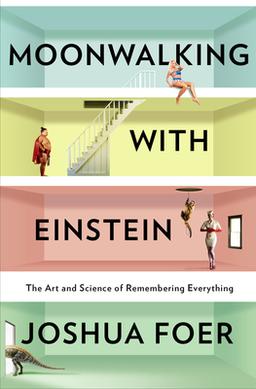
Moonwalking with Einstein by Joshua Foer

Posted by Anonymous


Reviewed by: José Beltrán

What I Read: Moonwalking with Einstein: The Art and Science of Remembering Everything by Joshua Foer

Find It @YCLD: Here!

What It's About:  Joshua Foer is a freelance science journalist  who won the U.S. Memory Championship in 2006, then represented 300 million US citizens at the World Memory Championship. Foer won 13th place out of 37 world competitors. Most importantly for Foer, he joined the KL7 Club: the world’s most esteemed organization of mental athletes. He trained himself using the loci (Latin word for places) system of memorization using what he called memory palaces. The Loci system is attributed to Simonides of Ceos (c.560 B.C.) who is credited with turning words into mind pictures. To use this system, compress as much information as possible into a single well-formed image. Use your creativity to imagine the most ludicrous, most raunchy, most hilarious, most unforgettable images. Remember not word by word but rather topic by topic, picture by picture.

One of the techniques is to use the number n to stand for the number 2, then use a picture of a nun to remember the number 22. A quote worth quoting: “Regular practice simply isn’t enough. To improve, we must watch ourselves fail, and learn from our mistakes.” His most quotable quote was “Our memories make us who we are. They are the seat of our values and source of our character.” This book is so vital that its author was invited to give a TED (Technology, Entertainment and Design) talk on it. (It is available on youtube.com).

What I Thought: Use it or lose it! “The human brain is estimated to be able to store 108432 bits; there are only about 1078 atoms in the observable universe.” In Greek Mythology, Memory is the mother of the Muses. Without memory how could there be music, art, history, literature or science? How could there be us, our loved ones? Before writing the only way to record anything was through sheer memory. Poetry was created to help people remember through rhyme and meter. Writing was our next crutch, but look at all the irretrievable literature that has been lost. It is important to stop and smell the roses, but to truly live a memorable life we have to remember to remember smelling the roses.


We are nearing the crossroad, with all our electronic memory outsourcing we are forgetting how to remember. We are externalizing, outsourcing our memory. Why bother remembering? Just tap it into the computer, the phone, the tablet. Ray Kurzweil, one of the most respected advocates of the role of technology in our future, estimates the singularity point, the year 2045, is when mankind takes the next step in evolution into a part human, part machine.

Foer laments that people no longer invest in their memory. Our minds have incredible memory capacities. However, in spite of all the memory stunts and winning the US Memory Championship, Foer’s Working Memory was not improved. Josh not only forgot his keys, he forgot his car and even where he had parked it. If we do not pay attention, if we are not deeply engaged, fully mindful, we will not be able to recall where we put our keys. We are constantly bombarded with distractions. Our memory will only work when we remember to stop being on autopilot, notice, and pay attention. We are too distracted to remember to remember. Remember: “practice makes perfect.”  To remember where you put your keys takes concentrated, self-conscious, deliberate will power and practice.

Readalikes: Your Memory: How It Works & How To Improve It by Kenneth L. Higbee, Ph.D.; The Memory Prescription by Gary Small, M.D. 

Or look this book up on NoveList!

Thursday, September 10, 2015

The Dark Side of the Screen: Film Noir by Foster Hirsch

Posted by Anonymous


Reviewed by: Jim Patrick

What I Read: The Dark Side of the Screen: Film Noir by Foster Hirsch

Find It @YCLD: Here!

What It's About: This ebook is a 2008 revision of a classic study of film noir that was first published in 1981.  Noir is known for its dark, shadowy visual style and effects, and Hirsch includes well-chosen photographs to illustrate his analysis of various filmmaking techniques.  A chapter titled “The Literary Background” discusses the impact of the “hardboiled” school of crime fiction on film noir.  Writers such as Raymond Chandler, Cornell Woolrich, and James M. Cain are discussed, including the film adaptations of their novels and short stories.  Another chapter is titled “The Cinematic Background.”  The influence of German Expressionism is discussed, particularly in the work of émigré directors such as Fritz Lang, Robert Siodmak, and Billy Wilder.  Chapters are also devoted to “The Noir Actor” and “The Noir Director.”  Hirsch critiques iconic noir actors such as Humphrey Bogart, Robert Mitchum, Barbara Stanwyck, and Gloria Grahame.  In addition to the directors mentioned previously, the book also surveys the noir-related work of Otto Preminger, Orson Welles, Jules Dassin, and others.

What I Thought: Foster Hirsch discusses film noir with a sweeping command of the cinematic genre/style/movement that flourished in Hollywood from the mid-forties to the mid-fifties.  His writing is both instructive and engaging.  The only negative aspect of reading this book in ebook format is the size and quality of the many photographs which accompany (and enhance) the text.  On my 6-inch Kindle screen these photographs were very small indeed.  Nonetheless, this is a most enjoyable and useful book for students and fans of classic films.  Watch some film noir—the library has several classic examples on DVD—and use this ebook as your guide!

Readalikes: Out of the Shadows by Gene D. Phillips; Encylopedia of Film Noir by Geoff Mayer

Or look this book up on NoveList!

Thursday, September 3, 2015

All You Can Pay by Anna Bernasek and D.T. Mongan

Posted by Anonymous


Reviewed by: Laurie Boone

What I ReadAll You Can Pay: How companies use our data to empty our wallets by Anna Bernasek and D. T. Mongan

Find It @YCLD: Here!


What It's About: The authors show how companies use the data they collect from us to determine how much you are willing to pay for everything you buy. Companies use this “customized marketing” to rapidly change prices and tailor complex “special offers” to individual consumers. The book details how consumers are led to believe they are finding the best deals by shopping online, but in reality fair bargaining is over.

What I Thought: Anyone who thinks they’ve bought the cheapest airline ticket or prided themselves on negotiating a great deal with a cable company or car dealership should read this book. It is quick to read but it will leave you feeling aggravated. You will feel like the sucker you are because Big Data and Big Business know the maximum you are willing to spend on anything. After reading this book I cringe every time I “agree” to those densely-written terms and conditions covering personal data and privacy. The authors include suggestions for what you can do, and the writing is accessible and includes source citations and an index.

Readalikes: Data and Goliath : the hidden battles to collect your data and control your world by Bruce Schneier.

Or look this book up oNoveList!

Thursday, August 20, 2015

A Buzz in the Meadow by Dave Goulson

Posted by Anonymous


Reviewed by: Sherri Levek

What I Read: A Buzz in the Meadow by Dave Goulson


Find It @YCLD: Here!

What It's About: Author and biologist Dave Goulson purchased a farm in the French countryside in order to create a wildflower meadow to attract all sorts of wildlife, but his main interest is insects, bumblebees in particular.  This is the story of his observations of the myriad ways in which nature is connected.

What I Thought: Goulson’s insights into the natural world are inspiring and often humorous.  I spent many hours in the backyard and on walks observing the often overlooked life of insects and plants while reading this book.  Each chapter is dedicated to a particular insect or plant.  The chapter on flies is especially engrossing (with “gross” being the dominant theme!).  Goulson also explains the many ways humans are affecting the environment, with helpful suggestions that aren’t preachy or condemning.  Goulson ends the book with this bit of inspiration:  “This book is intended to inspire, to encourage everyone to cherish what we have, and to illustrate what wonders we stand to lose if we do not change our ways” (Goulson 251).

Readalikes: Attracting Native Pollinators:  Protecting North America’s Bees and Butterflies:  The Xerces Society Guide by Eric Lee-Mader, Seeing Trees:  Discover the Extraordinary Secrets of Everyday Trees by Nancy R. Hugo, The Bees by Laline Paull, and The Sixth Extinction:  An Unnatural History by Elizabeth Kolbert

Or look this book up on NoveList!

Wednesday, August 12, 2015

The Book That Changed My Life by Roxanne J. Coady & Joy Johannesson, eds.

Posted by Anonymous


Reviewed by: José Beltrán

What I Read: The Book That Changed My Life by Roxanne J. Coady & Joy Johannesson, eds.

Find It @YCLD: Here!


What it’s About: The editors selected 72 authors' short essays about what book they themselves love that changed their lives and ultimately inspired them to become famous authors in their own right. The editors' Read to Grow Foundation is a 100% donor-supported nonprofit organization that distributes free books through volunteers to the needy. Roxanne J. Coady won the Publishers Weekly Bookseller of the Year Award in 1995.

What I Thought: These essays cover the gamut of book publishing. There are so many quotable passages in these essays from all walks of life. You should read it just to select your own favorite quotes. Not only did I come away with many quotes, but a large list of books to read, both by these authors, and yes, from their favorite authors too.

The touching, moving “I Think I Can” about The Little Engine That Could: Jeff Benedict recalls the many lessons his single mom taught him from the stories she read to him each night.

Robert Ballard, deep-sea explorer and bestselling author on the Titanic: the reason for being, raison d’être, is not the view at the end, but the act of becoming. “Life is the act of becoming.” He is the founder of the Jason Project to mentor middle school students by scientists from NASA, NOAA, DOE, and the National Geographic Society.

“You could read the same text repeatedly over time, and something fresh and new would declare itself with each reading”: Nichikas A. Basbanes on Shakespeare.

Chris Bhojalian: “I learned the comfort that can be taken from the pages of a book, and the friendship that can be found in a story.”

Da Chen, Chinese peasant to Wall Street Investment Banker, wrote “I write because my heart demands so.”

Patricia Cornwell wrote on her ancestor Harriet Beecher Stowe’s Uncle Tom’s Cabin: “The original sin: the abuse of power, the ultimate result which is enslavement, impoverishment, suffering, and death."

Cuban exile Carlos Eire wrote: “Books have made me who I am". Carlos recommends three Spanish books: Tres tristes tigresCien años de soledad, and Imitación De Cristo.

Robert Kurson wrote of Denial of Death by Ernest Becker: "…started reading. By the time I got up, I viewed the world differently, by the time I got up, I was a different person."

Yes, politicians do read! Senator Joe Lieberman: “Every time you read and learn …your life is changed dramatically over time as you continue learning and thinking." Senator John McCain wrote “For Whom the Bell Tolls is full of adventure, and fighting and romance…"

Sherwin B. Nuland: “Books are actually the stuff of which dreams are made.”

Frenchman, Jacques Pepin wrote of The Myth of Sisyphus by Albert Camus:  “We must be responsible for our actions.”

Ian Rankin:  “There was no rating on books, anybody could read anything.”

Lisa Scottoline: “Every book I read changes me in some way… and that’s why books matter. Lisa on “Angela’s Ashes” It breaks your heart and puts it back together again, but better”

Liz Smith on Voltaire: "I began to question and seek".

Michael Stern as a country boy was transported to unknown worlds by the Sears catalogue.

Frank McCourt tastes the words from Shakespeare's Henry VIII:  "It's like having jewels in my mouth when I say the words."

Readalikes: You've Got To Read This Book! by Jack Canfield, ed.

Or look this book up on NoveList!