Showing posts with label biography. Show all posts

Thursday, November 17, 2016

Possessed: The Life of Joan Crawford by Donald Spoto

Posted by Anonymous

Reviewed by: Jim Patrick

What I Read: Possessed: The Life of Joan Crawford by Donald Spoto

Find It @YCLD: Here!

What It's About: Donald Spoto opens his 2010 biography of Hollywood legend Joan Crawford by recounting his happy memory of writing Crawford a fan letter as an 11-year old and receiving a signed personal reply from the actress.  This anecdote sets the tone for Spoto's sympathetic effort to humanize a woman who has frequently been caricatured as the vicious "Mommy Dearest" of daughter Christine's infamous memoir and the 1981 film starring Faye Dunaway.  The real Joan Crawford was much more complicated and fascinating.  She rose from a troubled working-class background in the Midwest to Hollywood royalty with her 1929 marriage to Douglas Fairbanks, Jr.  This first of four marriages did not last, however.  As Spoto quotes Crawford, “I was always an outsider.  I was never good enough—not for the Fairbanks tribe, not for Mayer; not for his so-called film society.”  Joan Crawford used this sense of inferiority to constantly drive herself to improve as an actress, as a self-taught student of the arts, and as a mother of four adopted children.  Yet late in her life Crawford admitted that she had not been an ideal mother:  “You wanted to be a mother, but there just wasn’t time for it.”

What I Thought: I am a fan of Joan Crawford, although I will concede that her overcharged performances—especially in weaker films—often teeter on the brink of campy melodrama.  Donald Spoto does a fine job of guiding the reader through Crawford’s long, prolific career, pointing out high and low points along the way.  He gives examples of Crawford’s on-set behavior that confirm her reputation of being difficult and demanding, but he also shares reflections of costars and directors who spoke fondly of her support and loyalty.  Even Bette Davis—an alleged hated rival—discounted the infamous “feud” that supposedly played out during the filming of “What Ever Happened to Baby Jane?”:  “In three weeks of filming together, nothing bad happened between us.”  Donald Spoto defends Joan Crawford against the charges of her daughter Christine, but he doesn’t devote much space to Joan’s home life.  He does discuss her four marriages and numerous love affairs.  Interestingly, she remained close and friendly with most of these men long after the romances ended—particularly with Clark Gable.  Overall, I found Donald Spoto’s biography of Joan Crawford to be quite enjoyable and informative.  I would also recommend these Joan Crawford movies which can be found in the library’s DVD collection:  “The Women” (1939), “Mildred Pierce” (1945), and “What Ever Happened to Baby Jane” (1962).

Readalikes: Dark Victory: The Life of Bette Davis by Ed Sikov; Clark Gable: A Biography by Warren Harris

Or look this book up on NoveList!

Thursday, October 6, 2016

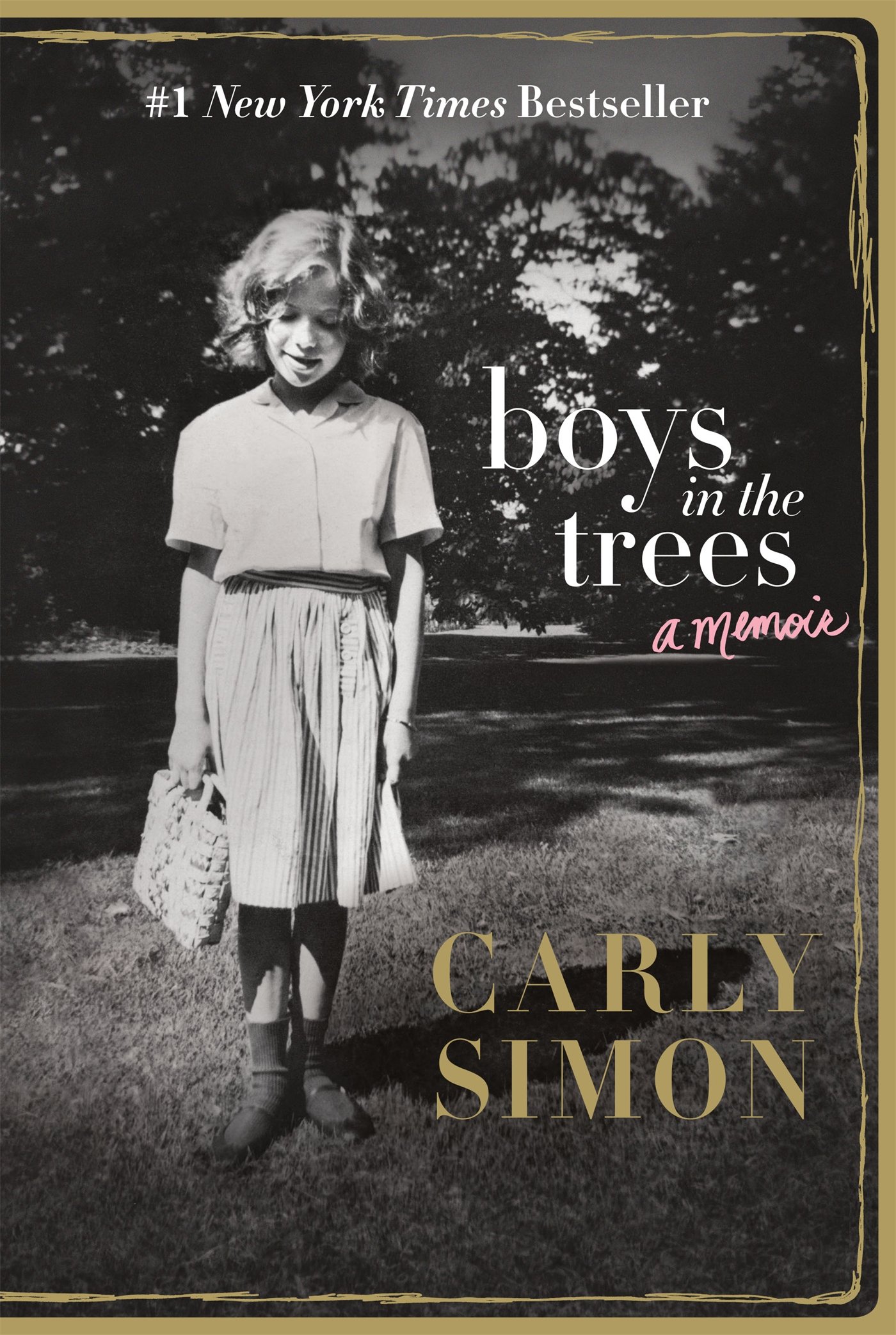
Boys in the Trees by Carly Simon

Posted by Anonymous


Reviewed by: Jim Patrick

What I Read: Boys in the Trees: A Memoir by Carly Simon

Find It @YCLD: Here!

What It's About: Now 70 years old, singer Carly Simon reflects on the first half of her life in Boys in the Trees: A Memoir.  The book is so brave and revealing that perhaps another Carly Simon song title would have been more fitting: We Have No Secrets.  

Thanks to an astonishing memory for details—aided by a lifetime of diary writing—Simon recounts incidents from her childhood up to the end of her marriage to singer James Taylor in 1981.  Far from her image as a spoiled rich girl—her father was the Simon of Simon and Schuster publishing—Carly Simon’s youth was scarred by her parents’ unhappy marriage and her own poor self-image.  As a pre-teen, Simon was physically molested by a family acquaintance.  She suffered for years with a stuttering impediment, and she has been treated for depression throughout her life.

Her success as a singer, originally as a duo with sister Lucy, seems to have taken Carly by surprise, and given her lifelong stage fright, Simon’s fame was a mixed blessing.  Her stardom did bring her in contact with others in the entertainment industry, and much of the book details romantic encounters with familiar icons such as Warren Beatty, Kris Kristofferson, Mick Jagger, and Cat Stevens.  And, yes, the mystery inspiration of Simon’s “You’re So Vain” is at least partially answered: Warren Beatty inspired one of the verses.  The latter part of the book details the decade-long marriage to James Taylor, a brilliant musician who was plagued by a heroin addiction throughout his years with Carly Simon.

What I Thought: Since this is not a “breezy” show business memoir, it does not always make for easy reading.  Carly Simon shares painful and unflattering episodes from her life, along with personal and professional joys and successes.  There were times when I would have preferred fewer intimate details (e.g. the description of her 1981 onstage panic attack in Pittsburgh), but overall I came away admiring Simon’s honesty and perseverance.  As a baby boomer who closely followed the music of Carly Simon and James Taylor at the height of their popularity, I would have liked more behind the scenes accounts of that musical era.  Although that was not the primary focus of Simon’s book, I did enjoy the musical anecdotes that were included.  And I look forward to reading the sequel.  

Readalikes: Girls Like Us: Carole King, Joni Mitchell, Carly Simon—and the Journey of a Generation by Sheila Weller; Sweet Dreams and Flying Machines: The Life and Music of James Taylor by Mark Ribowsky

Or look this book up on NoveList!

Thursday, September 1, 2016

The Grand Tour by Rich Kienzle

Posted by Anonymous


Reviewed by: Jim Patrick

What I Read: The Grand Tour: the Life and Music of George Jones by Rich Kienzle

Find It @YCLD: Here!

What It's About: When George Jones died in 2013 at the age of 81, he was widely acclaimed as the greatest country music singer ever.  More importantly, in his later years he had finally conquered most of his personal demons and addictions with the loving support of his wife Nancy Sepulvado.  George Jones’ recovery did not come easily, however.  His life story is full of the pathos and melodrama of his greatest songs, and Rich Kienzle recounts these personal struggles in the context of Jones’ legendary musical career.  Alcoholism destroyed the first two marriages, while the infamous third marriage to singer Tammy Wynette had the added burdens of Jones’ cocaine habit and Wynette’s personal and physical problems.  Due to poor financial management—including several attempts at establishing country music theme parks—Jones faced financial ruin on numerous occasions.  At the darkest point in the late 1970s, Jones was living in his car and was unable to get concert bookings due to his “No Show Jones” reputation.  Astonishingly, he recorded his masterpiece, “He Stopped Loving Her Today,” during this period of his life.

What I Thought: I have read numerous articles and liner notes by Rich Kienzle, so I approached this book with an appreciation for the author’s expertise and critical acumen.  The temptation in writing a George Jones biography is to dwell on the well-known sordid and sensational episodes, such as the time he rode his lawn mower to the liquor store after his second wife took away his car keys.  Kienzle shares this story and other painful, unflattering ones, but he balances these with his masterful descriptions of George Jones’ music.  By tracing Jones’ long recording career with numerous record companies and producers, Kienzle does an admirable job of explaining why so many of Jones’ peers rank him as the greatest county singer.  Detailed explanations are given of specific songs, songwriters, session musicians, and duet partners.  These sections of the book were particularly enlightening to me—and they even prompted me to go back and give a fresh listen to the great music of George Jones.

Readalikes: He Stopped Loving Her Today : George Jones, Billy Sherrill, and the Pretty-much Totally True story of the Making of the Greatest Country Record of All Time by Jack Isenhour; Tammy Wynette: Tragic Country Queen by Jimmy McDonough

Or look this book up on NoveList!

Thursday, June 9, 2016

Portrait of a Teacher by Ruth Leedy Gordon

Posted by Anonymous


Reviewed by: Jim Patrick

What I Read: Portrait of a Teacher: Mary Elizabeth Post 1841-1934 by Ruth Leedy Gordon

Find It @YCLD: Here!

Note: On June 17 at 11:00 a.m., the Main Library will host a celebration of Mary Elizabeth Post’s 175th birthday.  Local historian Carol Brooks will be the presenter.

What It's About:  Mary Elizabeth Post was a significant pioneer in Yuma’s history due to her forty-plus year teaching career and her lifelong community involvement in civic and church affairs.  When she died at the age of 93, she was still a member of the library board of trustees!

Author Ruth Gordon was a registered nurse who moved to Yuma in 1921.  She befriended Mary Elizabeth Post during the retired teacher’s final years.  Over the course of these 13 years, Gordon compiled notes from her countless conversations with Miss Post in preparation for writing a biography.  In 1938 the author presented her completed manuscript to the University of Arizona library.  However, the book was not published until 1990 when Ruth Gordon’s daughter Janet edited and published the version which is now held by the Yuma County Library District.

Portrait of a Teacher tracks Mary Elizabeth Post’s westward relocation from Vermont—first to Iowa for a few years, and then on to Arizona.  The account of Miss Post’s grueling trip by stage from San Diego to Ehrenberg is particularly colorful, as are the stories of the young Eastern teacher’s adjustments to her overwhelming culture shock.  For example, unlike most Yuma women at that time, Miss Post was a follower of the latest fashions and was particularly fond of fine hats.  She was a talented seamstress, and she eventually taught many local women to sew from patterns.

The book is not only a biography of Mary Elizabeth Post, but also an informal history of Yuma’s early growth—as remembered by an elderly, longtime resident.  Some of the topics addressed include the coming of the railroad, the building of roads and bridges, floods, newspaper rivalries, lively election campaigns, and, of course, the growth of Yuma’s schools.  Ruth Gordon recounts such events within the context of Mary Elizabeth Post’s life.  The author’s affection and admiration for her subject come through clearly, even when she pokes gentle fun at Miss Post’s “precise and sometimes obstinate manner.”

What I Thought:  Although Ruth Gordon was not a polished, professional author, she produced a biography of her friend Mary Elizabeth Post that is pleasantly readable and full of charming anecdotes about Miss Post and early Yuma.  Some of Gordon’s depictions of ethnic groups are not politically correct by today’s standards, but with that caveat, I would recommend this book to anyone wanting to learn more about Yuma’s early history.

Readalikes:  Early Yuma by Rosalie Crowe; Vanished Arizona by Martha Summerhayes

Or look this book up on NoveList!

Thursday, May 5, 2016

The Legends Club by John Feinstein

Posted by Anonymous


Reviewed by: Jim Patrick

What I Read: The Legends Club: Dean Smith, Mike Krzyzewski, Jim Valvano, and an Epic College Basketball Rivalry by John Feinstein

Find It @YCLD: Here!

What It's About: Although John Feinstein’s career began with a classic basketball book, A Season on the Brink, these days the Golf Channel contributor more frequently writes about golf.  In The Legends Club, Feinstein returns to his roots with a nostalgic, bittersweet look back at the glory days of Atlantic Coast Conference basketball in the 1980s and beyond.

When Jim Valvano and “Coach K” took their head coaching positions at North Carolina State and Duke in 1980, Dean Smith had already established the North Carolina program as a perennial NCAA powerhouse.  Valvano and Krzyzewski had the ability and audacity to take on Dean Smith, but their early experiences were not very successful.  In fact, Coach K came very close to getting fired in his second year with the Blue Devils.  Today he’s still at Duke as the winningest coach in Division One history.

In addition to retracing Coach K’s journey to that pinnacle of coaching achievement, The Legends Club also includes many exciting game and tournament accounts, as well as fascinating stories about the sometimes contentious interactions among the three coaches.  John Feinstein is a Duke graduate and a personal friend of Mike Krzyzewski.  He openly admits a Duke “bias,” but he also writes movingly of Coach Valvano’s 1983 national championship, as well as his brave, public battle with cancer ten years later.  And he writes admiringly of Coach Smith’s brilliant basketball innovations and his unwavering loyalty to his players.

What I Thought:  Although John Feinstein’s The Legends Club is a very enjoyable sports book, readers should not expect an expose of big-time college basketball.  Feinstein points out personal quirks and foibles of the three coaches, but he is clearly an admirer of all three men, as well as being a fan of ACC basketball.  The book does drag a bit after Valvano and Smith exit the story—due to Valvano’s death and to Smith’s retirement and later death from Alzheimer’s complications.  The final few chapters recount recent Duke basketball history in a fairly perfunctory narrative that lacks the drama of the earlier chapters.  Overall, however, Feinstein gives the reader fine portrayals of these three legendary coaches and the high-stakes environment in which they competed so successfully.

Readalikes: Last Dance: Behind the Scenes at the Final Four by John Feinstein;  Glory Road: My Story of the 1966 NCAA Basketball Championship by Don Haskins.

Or look this book up on NoveList!

Thursday, March 17, 2016

The Music of the Stanley Brothers by Gary B. Reid

Posted by Anonymous


Reviewed by: Jim Patrick

What I Read: The Music of the Stanley Brothers by Gary B. Reid

Find It @YCLD: Here!

What It's About: As the title indicates, this book is about the music of the legendary bluegrass artists Carter and Ralph Stanley.  The fascinating lives of the Stanleys are illuminated throughout the book, but mostly as background information to the detailed descriptions of the group’s numerous recording sessions held between 1946 and 1966.  Carter Stanley’s alcohol-related death at the age of 41 in 1966 forced “little brother” Ralph to embark on a solo career that spanned nearly 50 additional years!

Gary Reid’s book does not cover Ralph Stanley’s solo recordings, but he exhaustively documents the various eras of the brothers’ recorded output—eras that can be neatly broken down by the music companies that recorded the Stanley Brothers through the years.  The earliest recordings on Rich-R-Tone and Columbia found the brothers singing and playing in an “old-time” country music style reminiscent of the Monroe Brothers.  The Mercury Records years (1953-1958) are generally considered the artistic peak of the Stanley Brothers’ career for a number of reasons:  the high volume of classic original compositions by Carter, the emergence of Ralph’s hard-driving banjo style, and the talented musical support of fiddler Art Stamper and bassist/vocalist George Shuffler.

The last phase of the Stanley Brothers' career was 1958-1966 when they recorded for Starday and King Records.  This period is sometimes discounted by fans and critics due to King’s reputation as a second-rate company and due to the excessive number of non-original and novelty songs that the brothers were forced to record at King.  While it is true that Carter Stanley’s songwriting did decline during this period, as did the richness of his legendary singing voice, many great Stanley Brothers recordings were produced during the King years—particularly in the bluegrass gospel genre.  While not an original composition, the Stanley Brothers’ 1960 version of Albert Brumley’s “Rank Stranger” has been acclaimed as one of the finest recordings in bluegrass history.

What I Thought: In February 2016 Gary Reid presented his one man show, “A Life of Sorrow: The Life and Times of Carter Stanley” at the Yuma Library.  I enjoyed meeting Gary, and I found his performance moving and informative.  Mr. Reid is acknowledged as the leading authority on the music of the Stanley Brothers.  That expertise is plainly evident in this academic study of their recording career.  The many pages of recording session notes and discographies may be intimidating (or boring) to readers who are not familiar (or obsessed) with bluegrass music.  However, the book is well-written in an accessible style, and by skimming through the recording session charts and focusing on the narrative sections of the book, bluegrass fans and anyone who attended Mr. Reid’s library program will rewarded with many interesting stories behind the songs of this great musical group.

Readalikes: Can’t You Hear Me Callin’: The Life of Bill Monroe by Richard D. Smith

Or look this book up on NoveList!

Thursday, February 18, 2016

Ty Cobb: A Terrible Beauty by Charles Leerhsen

Posted by Anonymous


Reviewed by: Jim Patrick

What I ReadTy Cobb: A Terrible Beauty by Charles Leerhsen

Find It @YCLD: Here!

What It's About:  Ty Cobb, who played from 1905 to 1928, was inducted into the inaugural class of the Baseball Hall of Fame in 1936.  His contemporaries considered him the greatest player of his era due to his unrivaled hitting prowess and baserunning ability.  He won 12 batting championships and stole 892 bases in his career.  History has not been kind to Cobb, however.  His many detractors counter his accomplishments with his perceived character flaws.  He has been portrayed as being mean, physically violent, and racist—a nasty ballplayer and a wretched human being.  Several Cobb stories have been repeated ad nauseam in baseball books:  Cobb filing the spikes of his baseball shoes to create baserunning weapons of intimidation; Cobb running into the stands to attack a “crippled” heckler; and Cobb dying as a lonely and friendless recluse.  Leerhsen provides ample documentation for his rebuttals of these stories, and he also challenges numerous accusations and statements from previous biographies written by Charles Alexander and Al Stump.  Leerhsen’s Cobb is indeed highly competitive, overly sensitive, and capable of lashing out in anger and violence.  However, his Cobb is also a devoted family man, an intellectually curious man who loved to read, a financially savvy man who died a millionaire, and a generally well-liked man who dined (and golfed) with celebrities and politicians.  And, although a southerner, he was an early advocate of racial integration in baseball.  These unknown sides of Cobb have been rescued by Charles Leerhsen’s research.

What I Thought:  After getting over my initial shock at the author’s contemporary writing style and frequent pop culture references—Charlie Sheen and Donald Trump are both listed in the index—I found myself greatly enjoying this unique look at Ty Cobb’s life and career.  It is unique because Leerhsen presents Ty Cobb as a multi-dimensional human being, not the caricatured demon of previous Cobb biographies.  As someone who has read dozens of baseball biographies, I can attest that many are plagued by an overabundance of trite sports clichés or by a stuffy and overly reverential tone.  Fortunately, Ty Cobb: A Terrible Beauty, suffers from neither of these failings.  It is well-researched and smartly written, and for a 400+ page biography, it was a fast and entertaining read. 

Readalikes: Connie Mack and the Early Years of Baseball by Norman Macht
Baseball: An Illustrated History by Geoffrey C. Ward

Or look this book up on NoveList!


Thursday, January 21, 2016

The Black Count by Tom Reiss

Posted by Anonymous


Reviewed by: José Beltrán

What I Read: The Black Count: Glory, Revolution, Betrayal, and the Real Count of Monte Cristo by Tom Reiss

Find It @YCLD: Here!


What It's About: Tom Reiss, winner of the 2013 Pulitzer Prize for biography, narrates a biography of the father of famous novelist Alexandre Dumas. Alexandre Dumas the novelist based his novels on the swashbuckling adventures of his own father, French General Alexandre Dumas. Dumas the writer wrote in his memoir “You see, Father, I haven’t forgotten any of the memories that; you told me to keep…Your memory has lived in me like a sacred lamp, illuminating everything and everyone you ever touched…” Dumas the soldier was the hero at Mauld, Mont Cenis, Mantua, the Horatio Cocles of the Bridge of Brien, and Cairo. Dumas the soldier was born the Haitian black slave son of the beautiful black slave Marie Cessette and the ne'er-do-well  fugitive white French Norman noble Alexandre Antoine Davy Marquis de la Pailleterie(1714). Napoleon was the man behind Edmond Dantès’s suffering.

What I Thought: Reiss gives a front row seat to the events leading to the French Revolution and the revolution itself. The book goes to great detail explaining 1700 French society culture, especially slavery, the customs, and the players and the laws, especially Le Code Noir, the French codification of colonial slavery (1685) by the Ancien Régime. Mulattos were repressed as shown by the insolence related in the encounter and incident at Nicolet’s. D’Artagnan of the three musketeers represents the father of Alexandre Dumas as not fitting in. 

Dumas the soldier enlisted as a common soldier private, dragoon (light cavalry) and fully embodied the ideals of the French Revolution as an ardent republican, especially equality, bravery, leadership and above all his swordsmanship. Imprisoned, poisoned by the Inquisition, and later sidelined by Napoleon Bonaparte’s jealousy taking credit for the work of others such as Dumas’s victory at Mantua, Dumas was appointed to head the cavalry without mounts in the invasion of Egypt (1798) against the Mamelukes. Here Dantes witnessed slavery firsthand as Arab traders brought slaves from Ethiopia. Returning to Europe on the Belle Maltaise in 1799, Dumas almost drowned and, landing in Naples, was quarantined. Dantes finds himself the prisoner of the Holy Faith Army under Cardinal Fabrizio Ruffo, which massacred Jews, liberals, and republicans. The Cardinal joined with Turk Ottomans, British, and Russian forces to purge Naples of any French influence. This 2 year imprisonment in the fortress of Taranto became the basis for The Count of Monte Cristo.

As general in chief of the French Army in Italy, Dumas the soldier clashed with Napoleon, who thought himself Caesar, on the treatment of civilians. Napoleon finally achieved his dream: he was declared dictator in 1799 with the money and support of slavers, and then emperor in 1804. Napoleon reinstated slavery and forbade mixed marriage. Dumas the author was denied a secondary education, and admission to any military school or civilian college. His mother died at the age of 69, never having received a sou (penny) of the pension that Dumas the General was denied. She did live long enough to see Dumas the writer, her son achieve international fame and fortune. Her grandson became Dumas the playwright.

Readalikes: The Orientalist, Twelve Secrets in the Caucasus

Or look this book up on NoveList!

Thursday, November 12, 2015

The Last of the President's Men by Bob Woodward

Posted by Anonymous


Reviewed by: Jim Patrick

What I Read: The Last of the President's Men by Bob Woodward

Find It @YCLD: Here!


What It's About: The Last of the President’s Men by Bob Woodward is an odd, but fascinating, addition to the voluminous published works about the Watergate scandal that forced President Nixon from office in 1974.  The recent New York Times review describes the book as “slight but readable” and “decidedly slender.”  The book consists of 182 pages of text, followed by a 77-page Appendix of previously unreleased White House memos and correspondence.  The reason the book is appearing now, 40 years after Woodward and Bernstein’s influential All the President’s Men, is that in 2014 Alexander Butterfield decided to entrust Bob Woodward with a draft of an unpublished memoir and several boxes of notes and documents from his days as a Nixon administration presidential aide.

When questioned at a congressional hearing, Alexander Butterfield revealed the existence of Nixon’s secret taping system.  This testimony was crucial in the unraveling of the Watergate cover-up, but until now Butterfield has not shared the inside details of his years serving as “Haldeman’s Haldeman” (i.e. as chief aide to Nixon’s top assistant).

What I Thought: This book is not the first title I would recommend to someone unfamiliar with Watergate.  Rather, it brings to life the tense moral dilemma faced by Alexander Butterfield when, questioned under oath, he felt compelled to disclose his knowledge of the White House tapes.  Woodward skillfully recreates the story (and impact) of Butterfield’s testimony.  He also conveys the conflicted mix of pride and melancholy that Butterfield still feels today with respect to his role in exposing the Watergate cover-up.  The personal cost to Butterfield is also chronicled, including an abrupt end to his acclaimed military career and widespread ostracism by former friends and colleagues. 

The book includes several revealing anecdotes about Nixon’s obsessions and neuroses.  For example, Nixon was angered by the number of White House offices displaying photographs of John F. Kennedy.  The book includes memos detailing the planned “sanitization” of these photos.  Similar memos are included about the invitation lists for presidential dinners and church services.  Butterfield’s impressions of Nixon are of a brilliant statesman who was personally isolated and consumed by his hatred of his perceived enemies.  These impressions are not unique to Butterfield, but, as told by a member of Nixon’s inner circle, they are especially powerful, poignant, and credible.

Readalikes: The Secret Man: The Story of Watergate’s Deep Throat by Bob Woodard; The Nixon Defense by John Dean

Or look this book up on NoveList!

Thursday, October 15, 2015

The Bully Pulpit by Doris Kearns Goodwin

Posted by Anonymous


Reviewed by: Jim Patrick

What I ReadThe Bully Pulpit: Theodore Roosevelt, William Howard Taft, and the Golden Age of Journalism by Doris Kearns Goodwin

Find It @YCLD: Here!

What It's About: The book’s lengthy subtitle indicates the wide scope of historian Doris Kerns Goodwin’s latest publication.  She gives detailed biographical sketches of not only Theodore Roosevelt and William Howard Taft, but also of their parents, wives and children.  As in her other bestselling books, she fills her account with fascinating stories of the domestic lives of the Tafts and Roosevelts, including courtships, friendships and fall-outs, and parental sorrows and joys.  The wives, Nellie Taft and Edith Roosevelt, are both featured prominently in this book.  For example, Nellie Taft is shown to be much more ambitious and “political” than her husband William who always wanted to remain a judge.  Edith Roosevelt faced many challenges, such as marrying a widower with a young child, and being the wife of such an impetuous risk-taker as Theodore Roosevelt.  William and Theodore were the best of friends and close political partners until Roosevelt became disillusioned with Taft’s presidency.  The emergence of this painful rift is recounted in riveting detail by Kearns Goodwin.

The book’s subtitle also signals another major topic of The Bully Pulpit—the work of groundbreaking journalists of the Progressive Era, such as Lincoln Steffens, Ida Tarbell, and others who wrote for McClure’s magazine.  Kearns Goodwin clearly admires these journalists and their crusading spirit.  She illustrates how Roosevelt and the journalists had a generally positive and mutually beneficial relationship, while Taft was leery of the press and disliked having to cultivate relationships with reporters.

What I Thought: Loyal readers of Doris Kearns Goodwin know that her books arrive slowly but are always worth the wait.  Whether writing about Roosevelts, Kennedys, Lincolns, or any other historical subject, Kearns Goodwin always tells wonderful stories with her history, and she has a knack of making historical names come alive as real characters on her pages.  That’s why she is not only an excellent historian, but a popular one, as well.  At 750-plus pages, The Bully Pulpit is not a fast read, and its ambitious scope might be intimidating to those who haven’t read previous books by Doris Kearns Goodwin.  However, the various strands of this real-life epic are woven together by the author with her usual grace and skill, making for another enjoyable classic in the field of popular history.

Readalikes: The Roosevelts: An Intimate History by Geoffrey C. Ward; Theodore Rex by Edmund Morris; Team of Rivals by Doris Kearns Goodwin.

Or look this book up on NoveList!

Tuesday, July 21, 2015

Patron Picks! Summer Reading 2015 - Week 6, Part 1

Posted by Anonymous

Happy end of Summer Reading!! We had a record number of book reviews this week, so they've been broken up into two posts again. Look for the second installment on Thursday or Friday!

Reviewed by: Veronica
What I Read: The Winter Room by Gary Paulsen
Find it at YCLD: Here!
What I ThoughtThis books is about a young boy Eldon how live whit his family on a farm. Eldon describe whit details every day at the farm. In his narrative Eldon look back on smells, colors and activities that they need to do. This book talk about the family values, how the family is more important than the friend and all together obtain the best results. Another important success is in the winter room that is the living room in his farm

Reviewed by: Veronica
What I Read: The Tent by Gary Paulsen
Find it at YCLD: Here!
What I ThoughtThis book is hilarious, about a men and his son, they want to make money spreading the word of god, but they have never read the bible before. I like it is a good life lesson.

Reviewed by: Veronica
What I Read: The Contender by Robert Lipsyte
Find it at YCLD: Here!
What I ThoughtI love it because in our life always we are a contenders. this book is about Alfred he is a teenager with a rough life. his best friend James going to jail for robbery and Alfred doesn't want do the same. Alfred decides he wants to be a boxer, and begins his training at Donatelli's Gym, after that Alfred went back to night school to finish his education.

Reviewed by: Mea F.
What I Read: The Blue Tattoo by Margot Mifflin
Find it at YCLD: Here!
What I ThoughtThe Blue Tattoo was a wonderful read. The book expounds on the life of Olive Oatman. Her family was traveling from the midwest to California during the gold rush period. The journey for the Oatman family was treacherous; loosing friends along the way, depleating supplies. Just miles east of Fort Yuma the family is confronted by Yavapai Indians. The Indians massacre the family and take Olive and her sister, Mary Ann captive. The book discusses much historical events and history of the Native tribes in the area. Being new to the Yuma area, the historical value is as important as Olive's story. I appreciated the author discussing Olive's life after captivity, as well as, including writtings by Olive. I truly enjoyed this story, although at times the story has tragic lows. Thank you.

Reviewed by: Linda P.
What I Read: A Promise Kept by Robin Lee Hatcher
Find it at YCLD: Here!
What I Thought: It was good she kept your emotions going thru out.

Reviewed by: Linda P.
What I Read: Until We Touch by Susan Mallery
Find it at YCLD: Here!
What I Thought: She waits to long between series you forget characters until you're 1/2 way through

Reviewed by: Linda P.
What I Read: High-Risk Homecoming by Alison Stone
What I Thought: She kept you guessing right to the end who was really the drug dealer.

Reviewed by: Joann B. 
What I Read: Courage Stout by William MacLeod Raine
Find it at YCLD: Here!
What I Thought: This was a good cowboy book by a new to me author

Reviewed by: Joann B.
What I Read: Tough Hand by Wayne D. Overholser
Find it at YCLD: Here!
What I Thought: This was a different Western tale about a woman rancher, men working for her and driving cattle to market. There is a crooked banker and rowdey crooks, a hero that falls in love with the lady and helps her out. <3 Love

Reviewed by: Joann B.
What I Read: The Horse Creek Incident by Dusty Richards
Find it at YCLD: Here!
What I Thought: A corupt town, big ranchers against settlers, killings and beatings, town being run by one big guy!! One guy (good) runs against current crooked sheriff, wins after hard work to have all good people working together. Lots of cold weather & snow.

Reviewed by: Tom B.
What I ReadCourage Stout by William MacLeod Raine
Find it at YCLDHere!
What I Thought: Neal MacGowen, a small rancher, has to take on a group of large ranchers, who are calling all small ranch, rustlers. Very good reading.

Reviewed by: Tom B.
What I ReadTough Hand by Wayne D. Overholser
Find it at YCLDHere!
What I Thought: Good story
Jim Sullivan works for beautiful Troy Manders, helps her move her cattle, to land her father owns. Jim helps her fight the crookes, and crooked banker, who wants her land

Reviewed by: Tom B.
What I ReadThe Horse Creek Incident by Dusty Richards
Find it at YCLDHere!
What I Thought: Herschel Baker, had a close friend shot in the back & killed, a crooked sherriff, controlled by a very large cattle empire, refuses to look into the killing. Baker, a small rancher, decides to run for sherriff. A very good, interesting story.

Reviewed by: Angela T.
What I Read: Father Knows Less by Wendell Jamieson
Find it at YCLD: Here!
What I Thought: This was a funny book of anecdotes written by a reporter who wanted to answer the many random questions posed by his son. Instead of making up crazy answers, like his father did for him, the author takes time to contact various experts in the fields of study that the questions referred to. From astronauts (How far can a balloon go up until it pops?) to cultural anthropologists (Why can't I eat my sister?) these crazy questions and sometimes surprising answers will keep you entertained.

Reviewed by: Angela T.
What I Read: The Traitor's Wife by Allison Pataki
Find it at YCLD: Here!
What I Thought: A Historical fiction set during the Revolutionary War, this book uncovers the secrets held in Benedict Arnold's household. His young charming wife, Peggy, along with her maid, shape the results of the trecherous dealings of Arnold and his British co-conspirator Major John Andre. A fairly well written debut novel, still had some cliches but overall, an interesting take on a piece of American history.

Monday, June 29, 2015

Patron Picks! Summer Reading 2015 - Week 3

Posted by Anonymous


The Summer Reading Program is halfway through, but Yuma County's readers are more active than ever! There's still plenty of time to turn in a book review at any Yuma County Library for a chance to win a gift card - and to be featured on this blog!

Reviewed by: Dusty W.
What I Read: Thoughts from Within by Bonnie Moehle
Find it at YCLD: Here!
What I Thought I thought that this book was a very easy read. Nice little "self-help" book for those looking for a little boost in their lives. I appreciate how the author conveys her ideas for others in order to live stress-free lives without imposing upon their upbringing and moral values and even religious beliefs! I'd recommend this book to anyone especially if they are grounded in their belief/faith; although I do not believe in hypnotherapy, I DO believe we all possess (or have the ability to) the Power of A Higher Being to help us lead peaceful, loving, productive lives!

Reviewed by: Diane N.
What I Read: Moving Target by J.A. Jance
Find it at YCLD: Here!
What I Thought: Another great story from Jance. I love Sister Anselm. I hope she is in many more storyline to come. I love how each story stands alone, yet builds from prior ones. Well done again.

Reviewed by: Diane N.
What I Read: Cold Betrayal by J.A. Jance
Find it at YCLD: Here!
What I Thought: Great Read. I love getting 2 stories in one. What great way to bring Az. to life. I had to break out the Rand McNalley. Well done.

Reviewed by: Martha C.
What I Read: The Missing Piece by Kevin Egan
Find it at YCLD: Here!
What I Thought: It is about a trial for a collection of silver. When things go wrong at the first trial the characters go on with their lives until the trial is brought back. I thought the book was predictable. There were too many characters involved and I had trouble remembering everyone's rolls. Once the story delved deeper I was more engrosed and I wanted to know who finally got ownership of the silver. It had a happy ending and the bad guys were dealt with. I would not recommend this book.

Reviewed by: Martha C.
What I Read: Rebecca by Daphne DuMaurier
Find it at YCLD: Here!
What I Thought: This book is about a new bride trying to fit into a much different world than she has ever known. She is the second wife of a wealthy man and soon finds out all is not as it seems. I enjoyed this book! I could not put it down! I was enchanted by the way Mrs. de Winter had to adjust to her new surroundings. When we finally learn about the first wife, it is a sad tale, but has a true love story to overpower it. I don't think I had even heard about this classic before but I'm glad I have finished it.

Reviewed by: Martha C.
What I Read: Innocence by Dean Koontz
Find it at YCLD: Here!
What I Thought: This book was really interesting. It was frustrating when things weren't revealed early enough and I felt like some secrets were mentioned but never fully explained. I like that the two main characters were not your average people and were good. I would describe the story as bizzarre. It kept my attention because the secrets always felt just out of my reach. I would recommend this book with a small warning.

Reviewed by: Merrilie J.
What I Read: The Independence of Miss Mary Bennet by Colleen McCullough
Find it at YCLD: Here!
What I Thought: Ms McCullough is one of my favorite authors, and I've always enjoyed reading books about the English upper class in the early 1800's. This book did not disappoint. The premise is the "coming out" of spinsterhood of the 3rd sister in the Bennet family - sisters Elizabeth and Jane married into the Darcy family of Jane Austen's Pride and Prejudice. Mary had been tasked with caring for their mother, a tedious old lady. Mary spent her time reading "good" books and newspapers - she became enthused about doing charity work among the poor. When Mom died Mary was 38 and set out to make her Mark on the world.

Reviewed by: Merrilie J.
What I Read: Lean Mean Thirteen by Janet Evanovich
Find it at YCLD: Here!
What I Thought: This book is what I call the Wonder Bread of reading material - mind fluff - but every so often I enjoy a book of this type. Janet Evanovich is an amusing writer, good for several (many) chuckles. It will be quite some time before I'm ready to read another episode of Stephanie Plum, bounty hunter.

Reviewed by: Merrilie J. 
What I Read: HUGHES by Richard Hack
Find it at YCLD: Here!
What I Thought: This is a biography of Howard Hughes, said to be America's first Billionaire.
What I think: is that for a man whose original wealth stemmed from his father's oil-drilling bit (at the time the U.S. was beginning it's love affair with automobiles) he never really grew up or matured. True, he had an innovative brain which made improvements and innovations in the aircraft industry - but he was also enamored with the movie industry and young, beautiful Starletts. He died a lonely death, in his own filth (but still RICH!

Reviewed by: Joy M.
What I Read: Unintended Consequences by Stuart Woods
Find it at YCLD: Here!
What I Thought: Stone Barrington wakes up in Paris not knowing how he got there. The race is on for my favorite attorney. Stuart Woods uses great dialogue and presents a fast read that you can't put down. His character development is masterful. Each book is like visiting with old friends and catching up. Suggest that anyone new to Woods should start at the early books. You will find good friends, exciting action, not a lot of sex, and stories you can't put down, as stated earlier.

Reviewed by: Michael H.
What I Read: Saxon Series (The Burning Land, Death of Kings, The Pagan Lord) by Bernard Cornwell
Find it at YCLD: Here!
What I Thought: Great series of historical fiction. Tells the story of Uhtred & his friends & family during the times of King Alfred & his family. It is a great series - it has drama, action, intrigue, battles, love stories, family heritage & all done in a time of the forming of England under Alfred the Great & his family.

Reviewed by: Michael H.
What I Read: Inheritance Cycle (Eragon, Eldest, Brisingr, Inheritance) by Christopher Paolini
Find it at YCLD: Here!
What I Thought: This is a story of Eragon & how he finds a dragon egg & then how he & the dragon become essential in defeating the Empire The place is Alagaesia. The dragon is a female named Saphira. They encounter the various races of Alagaesia (elves, dwarves, werecats, & others) in a desperate fight with King Galbatorix. This is a coming of age tale & it is an interesting & compelling series.

Reviewed by: Jean W.
What I Read: Hell Gate by Linda Fairstein
Find it at YCLD: Here!
What I Thought: This is the second book by Linda Fairstein that I have read.
It was really interesting and kept me so interested that I finished it in less than 6 hours (different days) It had a surprise ending that always delights me. Since I am originally from upstate New York, I enjoyed reading & learning about the places mentioned in the Manhattan area. I look forward to reading more books by this author. Hopefully her future books will have some of these characters. I was impressed by the main characters.

Reviewed by: Jimmie D.
What I Read: Several books by Sandra Brown
Find it at YCLD: Here!
What I Thought: Sandra Brown is an amazing authoress. She creates a novel that holds you spellbound throughout the entire issue. What is really awesome about her, she has never told the same plot to any of her novels. It takes extreme concentration and imagination to create so many novels with entirely different ideas about a single topic.

Reviewed by: Patricia F.
What I Read: The Assassin by Clive Cussler
Find it at YCLD: Here!
What I Thought: Interesting story about Standard Oil by a rich man who wanted to own every oil fields in the world and didn't care who stood in his way wanting power & profit to line his pockets.

Have a wonderful holiday, and happy reading!

Wednesday, March 4, 2015

Queen of Fashion: What Marie Antoinette Wore to the Revolution by Caroline Weber

Posted by Anonymous


Reviewed by: Becky Brendel

What I Read: Queen of Fashion: What Marie Antoinette Wore to the Revolution by Caroline Weber

Find It @YCLD: Here!

What It's About: Part history of fashion and part biography, this book traces records of Marie Antoinette's clothing from her childhood in Austria up to her execution in the French Revolution. Although the ill-fated Queen of France is usually remembered as a spendthrift, frivolous woman, Weber argues that Marie Antoinette attempted to carve out a sphere of power for herself by setting fashion trends - even inspiring those who sought her downfall.

What I Thought:  This book started heavy-handed but quickly fascinated me. Weber's attempts to "prove" her unprovable thesis - we can't know for certain what a historical figure had thought or intended - sometimes seem far-fetched, yet she's also an excellent storyteller, with both an eye for detail and the ability to weave those details into a story without veering off on tangents. She also includes plenty of historical context, immersing the reader in a society where the clothes really did make the man (or woman, as the case may be). This book is highly recommended to anyone who likes clothes, is interested in new approaches to familiar history, or just wants to see a picture of a woman wearing a miniature ship on her head.

Readalikes: The Warrior Queens by Antonia Fraser, for more history from a woman's perspective; Madame Tussaud by Michelle Moran, for this same period (and focus) retold as a novel.

Or look this book up on NoveList!

Thursday, November 6, 2014

The Immortal Life of Henrietta Lacks by Rebecca Skloot

Posted by Yuma County Library


Reviewed by: Sherri Levek

What I ReadThe Immortal Life of Henrietta Lacks by Rebecca Skloot

Find It @YCLD:
 Here!

What It's About: The story of HeLa cells, which were derived from cancer patient  Henrietta Lacks without her knowledge or consent. This is the story of Henrietta’s tremendous contribution to science that has helped save countless lives throughout the world, yet created an emotional and physical toll on her surviving family.

What I Thought:  An honest, straight-forward account of Henrietta Lacks’ sacrifice. This work of nonfiction explores the damage caused to her family, both emotionally and physically, as well as the joy and pride they’ve experienced knowing the positive difference their mother's life has made to medical science. A triumphant story of loss, family, crisis, our country's difficult history with race, and ultimately, love. Author Rebecca Skloot explains the scientific aspects of the story with clarity and insight -- these sections throughout the book are never too complicated for even the unscientific population.

 Readalikes: The Emperor of All Maladies:  A Biography of Cancer  by Siddhartha Mukherjee; Notes from No Man’s Land: American Essays by Eula Biss

 Or look this book up on NoveList!