Possessed: The Life of Joan Crawford by Donald Spoto
Posted by Anonymous
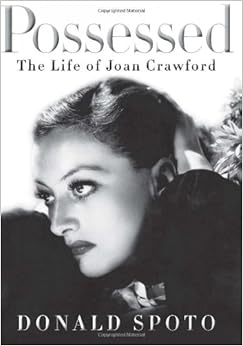
Reviewed by: Jim Patrick
What I Read: Possessed: The Life of Joan Crawford by Donald Spoto
Find It @YCLD: Here!
What It's About: Donald Spoto opens his 2010 biography of Hollywood legend Joan Crawford by recounting his happy memory of writing Crawford a fan letter as an 11-year old and receiving a signed personal reply from the actress. This anecdote sets the tone for Spoto's sympathetic effort to humanize a woman who has frequently been caricatured as the vicious "Mommy Dearest" of daughter Christine's infamous memoir and the 1981 film starring Faye Dunaway. The real Joan Crawford was much more complicated and fascinating. She rose from a troubled working-class background in the Midwest to Hollywood royalty with her 1929 marriage to Douglas Fairbanks, Jr. This first of four marriages did not last, however. As Spoto quotes Crawford, “I was always an outsider. I was never good enough—not for the Fairbanks tribe, not for Mayer; not for his so-called film society.” Joan Crawford used this sense of inferiority to constantly drive herself to improve as an actress, as a self-taught student of the arts, and as a mother of four adopted children. Yet late in her life Crawford admitted that she had not been an ideal mother: “You wanted to be a mother, but there just wasn’t time for it.”
What I Thought: I am a fan of Joan Crawford, although I will concede that her overcharged performances—especially in weaker films—often teeter on the brink of campy melodrama. Donald Spoto does a fine job of guiding the reader through Crawford’s long, prolific career, pointing out high and low points along the way. He gives examples of Crawford’s on-set behavior that confirm her reputation of being difficult and demanding, but he also shares reflections of costars and directors who spoke fondly of her support and loyalty. Even Bette Davis—an alleged hated rival—discounted the infamous “feud” that supposedly played out during the filming of “What Ever Happened to Baby Jane?”: “In three weeks of filming together, nothing bad happened between us.” Donald Spoto defends Joan Crawford against the charges of her daughter Christine, but he doesn’t devote much space to Joan’s home life. He does discuss her four marriages and numerous love affairs. Interestingly, she remained close and friendly with most of these men long after the romances ended—particularly with Clark Gable. Overall, I found Donald Spoto’s biography of Joan Crawford to be quite enjoyable and informative. I would also recommend these Joan Crawford movies which can be found in the library’s DVD collection: “The Women” (1939), “Mildred Pierce” (1945), and “What Ever Happened to Baby Jane” (1962).
Readalikes: Dark Victory: The Life of Bette Davis by Ed Sikov; Clark Gable: A Biography by Warren Harris


